
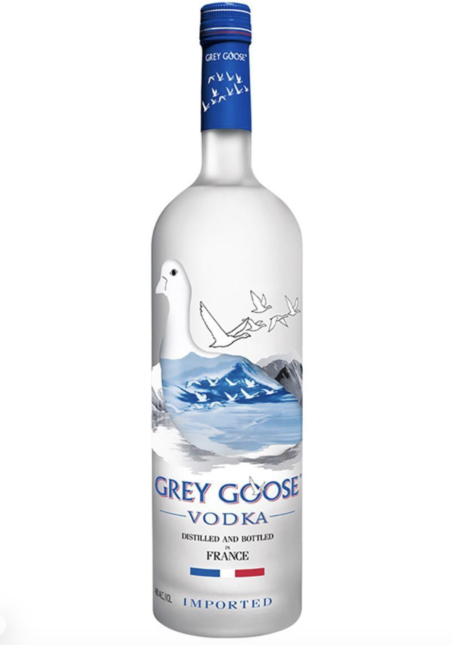
Angus “Pub” Crowley Reviews Grey Goose Vodka
“Vodka: Because Apparently Someone Decided Alcohol Didn’t Need Flavor.”
There are spirits.
There are good spirits.
There are spirits with history.
Character.
Aroma.
Flavor.
Personality.
Spirits that tell ye something about where they came from.
And then…
There is vodka.
Vodka is what happens when someone looks at alcohol and says:
“Can we remove everything interesting?”
And apparently, someone answered:
“Aye.”
Then they did.
A Word About Vodka
Now, before some vodka enthusiast starts composing an angry letter to the Gazette, let me make something perfectly clear:
I understand vodka.
I’ve been around spirits for a very long bloody time.
I’ve made whisky.
I’ve distilled rum.
I’ve watched tequila being made.
I’ve tasted brandy.
I’ve sampled spirits from places whose names I couldn’t pronounce even when sober.
I understand fermentation.
I understand distillation.
I understand aging.
I understand barrels.
I understand what happens when ye put something interesting into a barrel and wait long enough.
Vodka does none of this particularly well.
Because vodka’s entire philosophy appears to be:
“What if we made alcohol that tastes like almost nothing?”
Brilliant.
Ye’ve invented a liquid.
The Ancient History of Vodka
Now, vodka has been around for centuries.
The exact origins are argued over by people who apparently have nothing better to do.
Russia claims it.
Poland claims it.
Various other Eastern European nations have spent considerable time arguing over who invented it.
Frankly, I believe them all.
Because if there was one thing Eastern Europe historically had in abundance, it was potatoes, grain, cold weather and reasons to drink.
And eventually somebody discovered distillation.
They fermented grain.
Or potatoes.
Or whatever else was available.
They distilled it.
They purified it.
And produced a clear alcoholic spirit.
The first fellow tasted it.
He looked at his friend.
His friend looked at him.
Neither could identify a bloody flavor.
So they drank some more.
And thus vodka was born.
At least that’s how I remember it.
The historians have a different story.
The historians weren’t there.
I was.
Angus Encounters Vodka
I encountered vodka somewhere east of Warsaw.
Or possibly west of Warsaw.
There had been snow.
There had been drinking.
There had been an argument involving a priest, three pickles and a wooden spoon.
The details remain unclear.
What I remember clearly was walking into a little village distillery and finding several men standing around a copper still.
They were making vodka.
I watched them for a while.
They explained the process.
I nodded.
They poured me a glass.
I smelled it.
Nothing.
I tasted it.
Also nothing.
I looked at the distiller.
He looked at me.
I looked at the glass.
Then I asked:
“That’s it?”
He smiled proudly.
“Aye.”
I took another sip.
“Ye’ve distilled regret.”
He didn’t understand me.
Probably for the best.
The Wonderful World of Vodka
Now, vodka does have uses.
I’ll give it that.
Vodka can be used in cocktails.
Very effectively, in fact.
Because vodka doesn’t have much flavor of its own, it allows other ingredients to do the talking.
That’s useful.
It’s also useful in cooking.
Tomato sauce.
Cream sauces.
Certain desserts.
Some pastry applications.
Vodka can help extract flavors and alter texture without adding a strong spirit character.
Very useful.
But here’s the important distinction:
The tomato is providing the flavor.
The cream is providing the flavor.
The fruit is providing the flavor.
The herbs are providing the flavor.
Vodka is standing in the corner holding the alcohol.
It’s the designated driver of the cocktail.
Except nobody actually invited it.
And Then There’s Cleaning
Vodka also has another famous quality.
It’s bloody useful as a solvent.
Which, frankly, is where I believe vodka truly begins to shine.
Sticky residue?
Vodka.
Certain odors?
Vodka.
Some cleaning applications?
Vodka.
Need to remove something stubborn?
Vodka.
I’ve used whisky to clean things before.
I’ve used rum.
I’ve used various industrial solvents.
But vodka?
Vodka was practically designed for the job.
Because if ye’ve spent all that effort removing flavor, ye might as well remove some bloody grease while you’re at it.
I’ve often wondered whether vodka manufacturers have simply misunderstood their target market.
Perhaps the bottle shouldn’t say:
“Premium Vodka.”
Perhaps it should say:
“Premium Multi-Purpose Alcohol-Based Cleaning Fluid.”
I’d buy it.
Enter Grey Goose
And then we come to Grey Goose.
Now, Grey Goose is not some cheap bathtub spirit slapped into a fancy bottle.
It’s marketed as a premium vodka.
French wheat.
Careful distillation.
Filtration.
Purification.
Attention to detail.
The people making it clearly give a damn.
And I’ll give them credit for that.
If ye’re going to make vodka, ye might as well make the best bloody vodka ye can.
So I opened the bottle.
Poured a glass.
And prepared myself.
The Nose
I raised the glass.
I sniffed.
Nothing.
I sniffed again.
Still nothing.
I swirled it.
Sniffed.
Nothing.
I held it closer.
Nothing.
I looked at Sarah.
She looked at me.
I said:
“I believe I’ve discovered the perfect drink for someone with no nose.”
There is a faint sweetness.
A little grain.
Perhaps a touch of mineral character.
But mostly?
Nothing.
No oak.
No smoke.
No peat.
No agave.
No molasses.
No fruit.
No spice.
No character trying to climb out of the glass and introduce itself.
It’s just sitting there.
Quietly.
Like it’s embarrassed to be involved.
The First Sip
I took a sip.
And I’ll admit something.
It’s smooth.
Very smooth.
Clean.
Soft.
There’s a slight sweetness.
A little grain character.
A mild warmth.
The texture is almost creamy.
And there’s very little burn.
I swallowed.
Paused.
Considered it carefully.
Then I said:
“Well, ye’ve certainly removed the bloody alcohol.”
Sarah looked confused.
I explained:
“It’s still there. Ye just can’t taste it.”
That’s the trick with vodka.
The better it is, apparently, the less ye notice that ye’re drinking anything.
Which raises an interesting question.
Why am I drinking it?
The Second Sip
I took another sip.
Still smooth.
Still clean.
Still almost completely devoid of personality.
At this point, I began thinking about other spirits.
Whisky has malt.
Oak.
Vanilla.
Caramel.
Smoke.
Fruit.
Spice.
Rum has molasses.
Brown sugar.
Vanilla.
Tropical fruit.
Spice.
Tequila has agave.
Pepper.
Citrus.
Earth.
Minerality.
Vodka has…
Vodka.
That’s not a flavor.
That’s a category.
The Cocktail Test
Now, here’s where Grey Goose does make sense.
Put it into a cocktail.
Give it citrus.
Sugar.
Bitters.
Fruit.
Herbs.
Liqueurs.
Spices.
Anything with a bloody pulse.
And suddenly you’ve got something interesting.
Because vodka doesn’t fight with the other ingredients.
It doesn’t overpower them.
It doesn’t stomp into the cocktail wearing muddy boots and announce:
“HELLO, I’M WHISKY.”
It simply adds alcohol.
And sometimes that’s exactly what ye want.
I’ll give vodka that.
It’s useful.
It’s versatile.
It’s unobtrusive.
It behaves itself.
Frankly, that’s probably why I don’t like it.
The Angus Crowley Vodka Test
I have developed a simple test for vodka.
It’s very scientific.
Ye take a sip.
Then ye ask:
“What does this taste like?”
If the answer is:
“The ice cube I dropped in it.”
Congratulations.
You’ve successfully described vodka.
Grey Goose passes the test beautifully.
Because it doesn’t taste like much of anything.
Which is apparently the entire bloody point.
Is Grey Goose Good?
Yes.
There.
I’ve said it.
Grey Goose is well-made vodka.
It’s clean.
It’s smooth.
It’s refined.
It’s consistent.
It has very little harshness.
If vodka is yer thing, ye could certainly do considerably worse.
But that’s where my praise ends.
Because the question isn’t:
“Is Grey Goose good vodka?”
The question is:
“Do I want to drink vodka?”
And the answer is:
No.
I’d rather have whisky.
I’d rather have rum.
I’d rather have tequila.
I’d rather have brandy.
I’d rather have a questionable homemade spirit from a Romanian shed.
I’d even rather drink something an Englishman made.
And ye know how much that pains me.
The Verdict
Grey Goose has accomplished exactly what it set out to accomplish.
It’s vodka.
Premium vodka.
Exceptionally clean vodka.
Smooth vodka.
Useful vodka.
But ultimately…
Vodka.
It’s alcohol without the burden of flavor.
It’s the beige paint of the spirits world.
It’s the unsalted cracker.
It’s the plain white T-shirt.
It’s a personality test where every answer is:
“Whatever ye want it to be.”
And apparently people love that.
Good for them.
More whisky for me.
What Is Vodka Actually Good For?
Now, I don’t want anyone thinking I’m completely unreasonable.
Vodka has legitimate uses.
Cocktails?
Aye.
Especially when ye want the other ingredients to shine.
Cooking?
Aye.
It can be genuinely useful in sauces and certain recipes.
Extracting flavors?
Aye.
Fair enough.
Cleaning?
Absolutely.
Now we’re talking.
Removing sticky residue?
Aye.
Give me the bloody bottle.
Drinking straight?
I stared at the glass for several seconds.
“Why?”
Drinking it chilled?
“Why would making nothing cold make it something?”
Paying premium money for it?
I laughed.
For quite some time.
🦫 Angus Crowley’s Rating
★★ Beavers out of 5
“It’s clean. It’s smooth. It’s well made. It’s also vodka. Two Beavers, and one of them is only here because I couldn’t find a use for him elsewhere.”
Two Beavers.
That’s being generous.
One Beaver means:
“This exists.”
Two Beavers means:
“I understand why someone might drink it.”
Two and a half means:
“I’ll drink it if someone hands me a glass.”
Three means:
“I might actually enjoy this.”
Three and a half means:
“That’s respectable.”
Four means:
“I’d buy it.”
Four and a half means:
“Hide the bottle from me.”
Five means:
“Someone has made a terrible mistake and left Angus alone with the entire case.”
Grey Goose doesn’t come close.
It’s good vodka.
That’s like being the finest shovel in a room full of shovels.
I’m still not eating dinner with one.
Final Thoughts From Angus
I’ll say this for Grey Goose:
If ye like vodka, buy it.
If ye want a clean spirit for cocktails, it’s a perfectly respectable choice.
If ye want something that won’t overwhelm delicate ingredients, it’ll do the job.
If ye need something to clean adhesive off a bloody countertop…
Buy two bottles.
One for the cocktails.
One for the countertop.
And if ye’re planning to drink vodka straight?
Well…
There’s a perfectly good bottle of whisky sitting right over there.
Use yer bloody head.
Now if ye’ll excuse me, I’m going to pour myself a proper drink.
Something with flavor.
Something with history.
Something that doesn’t require me to add three other ingredients before it develops a personality.
Whisky.
Aye.
That’s better.
Angus “Pub” Crowley is a Highland beaver of considerable age who has personally consumed spirits from more countries than most historians have heard of.
He has no formal qualifications in vodka.
He considers this an advantage.
The Beaver Lodge Gazette accepts no responsibility for vodka being used as a cleaning product, solvent, cocktail ingredient, cooking ingredient, or any other purpose Angus may have irresponsibly suggested.
Vodka manufacturers are encouraged to label their products appropriately.
“Not for drinking” may be a good start.