
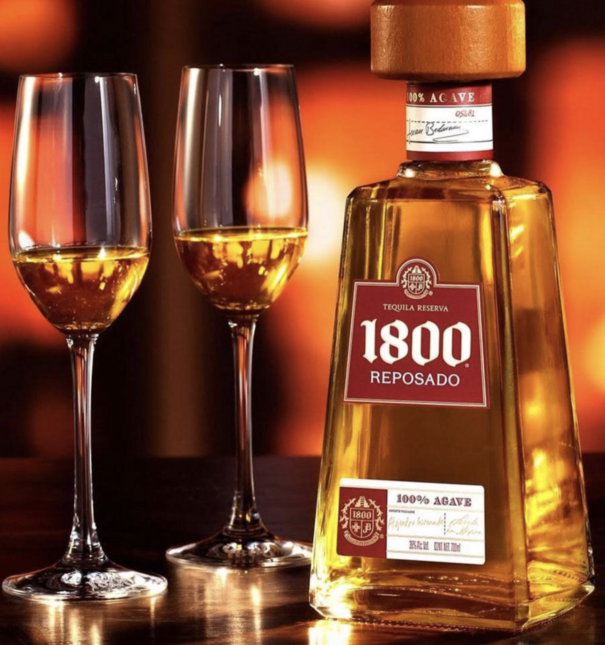
Angus “Pub” Crowley Reviews 1800 Reposado Tequila
“Tequila: Proof That Mexico Took One Look at Agave and Said, ‘We Can Ferment This.’”
Tequila.
Now there’s a spirit.
Hot.
Earthy.
Sweet.
Spicy.
And possessed of a remarkable ability to turn a perfectly respectable evening into a story that begins with:
“Well… it seemed like a good idea at the time.”
Historians will give ye the respectable version — ancient civilizations, agave, fermentation, Spanish distillation, Jalisco, centuries of tradition. Very educational. Very tidy.
And almost completely missing the most important part:
Angus was there.
Of course I was.
I’ve been everywhere.
Before Tequila
Mexico had alcohol long before tequila. The ancient peoples made pulque — a thick, cloudy, fermented agave drink that could get ye properly sideways if ye weren’t careful. And they were perfectly happy with it.
Then the Spanish arrived.
Along with horses, armor, religion, questionable colonial administration, and a spectacular misunderstanding of local customs, they brought something rather important:
distillation.
Now imagine the conversation:
Mexican fellow: “We have agave.”
Spanish fellow: “We have a still.”
Mexican: “What does it do?”
Spaniard: “Makes alcohol stronger.”
Mexican: looks at agave… looks at still… looks back at Spaniard
“Can it make that stronger?”
The Spaniard smiles.
And somewhere in Mexico, history quietly whispers:
“Oh, this is going to get interesting.”
Angus Meets Agave
I happened to be in the region at the time — traveling after an unfortunate disagreement with a Scottish tax collector who insisted whisky was taxable. I explained whisky was a cultural necessity. He disagreed. I threw him into a creek.
Mexico was beautiful — excellent food, remarkable people, and a plant that looked like someone had crossed a pineapple with a medieval weapon.
Agave.
I knew immediately the plant had potential. I’d distilled barley, fruit, grain, rum, and one French “wine” we do not discuss. But agave? That was different.
The plant stores enormous sugar in its heart.
And once ye cook it…
Oh, my.
The Piña
The heart of the agave is called the piña because it resembles a giant pineapple — except this pineapple has spent years in the Mexican sun and is surrounded by razor‑sharp leaves designed by nature to punish optimism.
The jimadores remove the leaves.
They harvest the heart.
They cook the piñas slowly.
And that’s where the magic begins — heat converts the carbohydrates into fermentable sugars.
Angus understands cooking.
Angus understands fermentation.
Angus understands distillation.
And Angus understands one other thing:
Anything that begins with “let’s cook this giant plant” deserves further investigation.
So naturally, I stayed.
The First Tequila
I wasn’t personally responsible for inventing tequila — let’s be clear, I have a reputation to maintain — but I was certainly present when people started refining the process.
Agave cooked.
Sugars extracted.
Fermentation bubbling.
Then the still.
When that first agave spirit emerged from the copper…
Well.
It smelled earthy.
Sweet.
Green.
Peppery.
Unlike anything I’d ever tasted.
I took a sip.
Paused.
Took another.
Then looked at the fellow beside me.
“Ye know what ye’ve done?”
He shook his head.
“Ye’ve made a spirit that tastes like Mexico.”
He smiled.
I smiled.
Then I drank the rest.
From Fire to Oak
Fresh tequila is bright, lively, peppery, intensely agave‑forward.
Then someone looked at a barrel and thought:
“I wonder what happens if we put tequila in that.”
That person deserves a medal.
Time and oak transform a spirit — vanilla, caramel, spice, softness, depth. The sharp edges round off. The spirit gets comfortable.
Eventually someone gave it a name:
Reposado.
Rested.
Appropriate.
After months in a barrel, even tequila is well rested.
Enter 1800
Which brings us to the bottle in front of me:
1800 Reposado.
Made from 100% Blue Weber agave, cooked in traditional masonry ovens for 36–40 hours, fermented, double‑distilled in copper pot stills, and rested in new American and French oak.
And that combination makes itself known.
Bright honey color.
Agave and oak on the nose.
Caramel.
Vanilla.
Warm spice.
A touch of smoke.
Earthy cooked agave underneath.
This tequila isn’t hiding where it came from.
It’s just wearing a nicer coat.
Angus’s Tasting
The Nose
Oak first.
Then caramel.
Then vanilla.
Then agave.
Warm earthiness.
A little spice.
A touch of smoke.
It smells like someone took a field of blue agave, set a campfire beside it, poured caramel over the whole bloody thing, and invited me to dinner.
Naturally, I accepted.
The First Sip
Smooth.
Sweet.
Warm.
Caramel arrives first.
Then vanilla.
Then agave steps forward.
Gentle pepper underneath.
Oak present but not overpowering.
A warmth that builds without trying to set fire to yer tongue.
A tequila should taste like tequila — otherwise ye’ve simply put alcohol in a brown bottle and charged more money for it.
1800 Reposado doesn’t make that mistake.
Agave is still in charge.
The Middle
This is where it shines.
Sweetness and oak working together:
Caramel.
Vanilla.
Mild spice.
A little smoke.
Then agave returns — creamy, soft, warm, almost buttery.
The official notes mention caramel, mild spices, smokiness, sweet orange peel, white pepper, and marzipan.
I agree with most of that.
Although I would describe the marzipan as:
“Almonds wearing a Mexican hat.”
Considerably more scientific.
The Finish
Orange peel.
Pepper.
Sweetness.
Oak.
Warm lingering agave.
Not enormous.
Doesn’t need to be.
It hangs around just long enough to make ye consider another sip.
And that, lad, is dangerous.
One sip becomes two.
Two becomes three.
Three becomes:
“Who finished the tequila?”
And nobody remembers.
How Should Ye Drink It?
Neat?
Aye.
Perfectly respectable sipping tequila.
Over ice?
Absolutely.
Chill softens it and lets caramel and vanilla shine.
Cocktails?
Without question.
A good reposado doesn’t disappear — it contributes.
But try it neat first.
Give the poor bastard a chance to introduce itself before ye bury it beneath lime juice, sugar, and enough ice to sink the Titanic.
The Angus Crowley Verdict
Is 1800 Reposado the finest tequila ever distilled?
No.
Let’s not get carried away.
There are older tequilas.
More expensive tequilas.
Tequilas made for people who own trousers that cost more than my boat.
But that’s not the question.
The question is:
Is 1800 Reposado good?
Aye.
Very good.
Approachable without being boring.
Sweet without syrup.
Oaky without becoming a barrel.
Spicy without kicking ye in the teeth.
And most importantly:
It tastes like tequila.
Too many spirits spend so much time trying to become something else that they forget what they bloody are.
1800 Reposado knows:
Agave first.
Oak second.
Trouble third.
Exactly the correct order.
🦫 Angus Crowley’s Rating
★★★★½ Beavers out of 5
“Warm. Smooth. Spicy. Proper agave character. A fine example of what happens when Mexico puts a bloody good plant in a barrel and has the patience to wait.”
I’d drink it neat.
I’d drink it over ice.
I’d put it in a cocktail.
And if ye hand Angus a bottle at sunset with a plate of tacos nearby…
Well, lad, ye’ve just made yourself a very good evening.
Just don’t ask how many bottles we’ve had.
That’s between me, the bartender, and the Mexican government.
And frankly, the government already knows too much.